Showing posts with label Opinion Piece. Show all posts

Saturday, 15 October 2011

Nintendo Connection Tour 2011 Impressions

Nintendo Connection Tour 2011 Impressions


By Tim.


Nintendo… The name’s synonymous with most of Gen Y’s childhood, and though it’s easy to see the Big N with rose-tinted glasses of nostalgic glory, I got a hard dose of reality today with previews of the upcoming first-party titles on both the ageing Nintendo Wii console, and new-kid-on-the-block, Nintendo 3DS.

The Legend of Zelda: Skyward Sword (Nintendo Wii, 2011)


The centerpiece no doubt, was the latest installment of Nintendo’s blockbuster ‘Legend of Zelda’ series, titled Skyward Sword. The playable consoles were only running demo versions of the game, featuring three scenarios: a dungeon, a boss battle and a flying mode.

A big feature of the game is in its support of the Wii motion-plus, supposedly giving an even greater degree of control and precision to the movement and combat mechanics. In my opinion, they plain sucked. One source of this feeling was in the axial recognition; the tolerance levels felt far too blurry, as attempting to have Link do a forward thrust often results in him swinging wildly in other directions; If the game’s combat is meant to be fast-paced and action driven, then why did they make the controls so finicky? 

I couldn’t for the life of me figure out how to even pull the shield out- I’d tried every logical button combination but the damn thing just hung by my side as I dodged flying arrows left and right. It wasn’t until my friend suggested I try swinging the nunchuck controller that I actually saw some results. It might not seem like the most cryptic maneuver, but when EVERY other Zelda title since Ocarina of Time had the shield designated to a button, this felt like an unnecessarily clumsy and uncoordinated choice.

I think Twilight Princess had it right with the controls; essentially, swinging the Wii-mote was the equivalent to mashing the B-button: it had no directional significance, it only detected when to swing the sword, not where the sword went. That was dictated by the directions on the analogue stick. It felt tight and concise. The pointer function was effective too, making the aiming of the hookshot, arrows, and the boomerang very quick and easy. 

Using the bow in Skyward Sword was one of the sloppiest moments of all- pressing the button wasn’t enough, you had to go into an awkward first-person view while holding down one button, then hold down a separate button with the other hand to actually charge and fire the thing. It felt nowhere near as fluid as the bow on previous Zelda games, where you could fire off arrows on the fly while targeting an enemy. I tried desperately to pull out my bow in the boss fight while targeting him, but my efforts were in vain.

To top that off, the game’s graphics are a butt-ugly, low resolution, low poly mess. I don’t want to get into any of the long-running debates about the Wii and its graphical capacity, so I’ll simply mention the predecessor, Twilight Princess. I remember an article five years back in a popular gaming magazine upon the Wii’s launch, reviewing Twilight Princess, a launch title. The game was praised as a great effort as a Zelda game, but the graphics were criticized as ‘Looking alright, for a Gamecube game’. 

Personally, I thought Twilight Princess was visually quite nice; sure it was no comparison for the hardware monster that was Crysis, but it looked sharp and nice; the environment was nicely detailed, the geometry was pretty and certain elements like ambient lighting and sharp shadow details were effective and pleasing to the eye. As the game was ultimately a port from a Gamecube title, obviously it wasn’t about to push any hardware envelope on the Wii, but visually it was among the best looking Gamecube games (along with Resident Evil 4).

Now flash forward five years; a lot has happened with graphics and gaming in that time, even for the Wii; with games like The Conduit (2009, High Voltage Software) that proved the Wii is capable of high-end graphical processes like bump mapping, detailed lighting effects like reflection and refraction, motion blur and animated textures. 

This helped restore some faith from the visually oriented gamers, and showed that perhaps there is hope for some visually pleasant gaming on the platform, comparable in some small way to what we’ve seen with the PS3 and Xbox 360. Nintendo instead did a complete 180 on this technology, opting for smudgy, bland textures, ugly low-poly geometry and an overall look that appears to be stuck in some kind of 10-year time warp.

Graphics may not be everything, but seriously, what the hell is hanging from that tree?


The system’s definitely showing its age, but some elements have aged more gracefully than others- for instance, I caught a glimpse of some players trying out the Kirby game; I was far more satisfied with the simplistic platformer visuals of that game- essentially they looked like a zazzed-up version of the old 16-bit sprites. I liked it.

All I can say is that the final game had better be something real spellbinding because the demo felt like a muddy, uncoordinated, uninspired mess of a game. A Link To The Fail.


Mario Kart 7 (Nintendo 3DS, 2011)


I don’t have much to say about Mario Kart 7. For better or worse, it’s Mario Kart as we’ve known and loved it. Maybe that’s what’s so average about it though, it really doesn’t bring much new to the table. I only played one track, the items were all standard Mario Kart fare, but there was also a bunch of ‘coins’ scattered around the track, which when collected act as both a defensive barrier and increase speed. It’s good to see an otherwise unused feature from the original Super Mario Kart (Super Nintendo, 1992) make a return.

On top of that was the new feature of Kart equipment; you can now equip your Kart with hang-gliders to add a degree of aerial control during long jump sequences. Apparently there will be more stuff in the future, so this could be interesting in shaping the experience of the new game.

I’m pretty sick of the whole ‘3D’ gimmick of the 3DS though. From some articles I’ve read, a significant number of 3DS owners don’t even play with the 3D effect, I really don’t find it adds much to the experience.

I only hope the final version has a better system of online play than Mario Kart DS, which was flawed on a number of levels. I think they got the formula right with Mario Kart Wii; having 12 racers coming together in a drop-in-drop-out system really worked well. I’m hoping Mario Kart 7 supports a similar scheme to this. Good multiplayer has always given longetivity to Mario Kart games.

Super Mario Land 3DS (Nintendo 3DS, 2011)


This felt awkward more than anything; trying to preserve 2D platform mechanics into a pseudo-3D environment really didn’t do it for me. It was cool to see Tanuki Mario make a return (after a long hiatus from SMB3), but overall the experience felt empty. Being a 3D Mario game, I felt naturally entitled to Mario’s plethora of physical attacks from Super Mario 64, but he delivered none. I’m guessing because they wanted to go back to the basic platforming roots.. If so, why’d they still include new features like the U-turn jump, wall jumping and the ability to grip onto wall faces?

The camera angles felt crude and unrefined; unlike the Super Mario 64 camera, which flowed freely and dynamically with you and your environment, the camera here sits statically, giving a fixed side-on look. To move the camera angle, you’ve got to move your left thumb down from the analogue stick and make adjustments with the D-pad; that might not sound like much, but its enough to take you out of the moment- whatever movement you’re doing must come to a complete stop, unlike in Super Mario 64 where the camera buttons were all operated by your right hand, while your left managed the analogue stick. Even then, the camera still felt stiff and unaccommodating.

Starfox 64 3D (Nintendo 3DS, 2011)


I loved Starfox 64 (or Lylat Wars as it was known here in PAL territories). Naturally, I was keen to see what they’d done with the concept some 14 years after the original smash hit took over Nintendo 64s all over the world. It’s still Starfox as we remember and love; the scripted sequences still happen at the same time, in the same way. One thing that did irk me was that while some textures had been overhauled (the water looks fantastic), and new visual effects had been added, the basic geometry of the environment is still the geometry from 1997. This leads to a somewhat paradoxical experience as you go through a very familiar, yet fresh terrain.

Another detail I found obtrusive was the frequent use of subtitles whenever an event occurred; when a boss or Starwolf appears, you get a  text description appearing onscreen about them. This felt somewhat unnecessary, and something that seemed like a better moment for the credits than mid game. It’s a decent game, though the controls take some getting used to, especially for us N64 kids.

At the same time I can’t help but ask why? Why did Nintendo have to go and re-release an old classic title on the 3DS? Why couldn’t they make a new Starfox title for the console, a fresh start? A reboot? In all honesty it feels like more of a lazy cash grab from the Big N on a game that most of my generation has fond memories of, than a genuine attempt at creating a compelling new experience.

I don’t know, I can’t say I got a particularly good feeling of Nintendo’s up and coming first party titles… They felt like a stale mix of rehashed, tried-and-true franchises, but with gimmicky features like 3D (that’s more straining on your eyes than anything else) and heightened motion control sensitivity (that never does what you want it to do). 

The problem isn’t that they’ve forgotten their roots; the problem is they’re too afraid to let them go.

Tim.

Tuesday, 7 June 2011

Images of Women in Videogames


Female Representations

The best and worse of;


Let’s face it, you can’t play the Tomb Raider games without copping an eyeful of shapely heroine, Lara Croft and her flawless figure. Nor can you flip on a game of Serious Sam without seeing an over-exaggerated male figure engaging in an endless testosterone-fuelled gun slinging rampage. Portrayals of gender in videogames is nothing new; from way back to the mid-80s with stout plumber, Mario rescuing the hapless Princess Peach in the eponymous Super Mario Brothers, to the ass-kicking Jessica Cannon rescuing Colonel Blade in SiN Episodes. 

Though these representations of gender do not go unchallenged; some groups feel that by hypersexualising their characters, videogames objectify both women and men, while others feel it falls safely into the realm of ‘fantasy’ and as such should be left at that. However it isn’t all bad, videogames have thrown a few curve-balls here and there and given us some unexpected heroes and heroines who defy the stereotypes and conventions. Through the ages, here is a list of some of the most positive, and negative representations of both men and women in videogames.

The worst of…


5. Elexis Sinclaire (SiN series)

What can be said about Elexis Sinclaire? She’s a highly successful businesswoman, biochemist, entrepreneur, and proprietor of a multinational biotechnics company. Hell, she might have even made the list of Top 5 most positive representations of women if she didn’t look like this:


Is it normal for female CEOs to wear exceptionally low-cut blouses exposing their 32DD (don’t ask how I know that) cleavage? Sure, you could call me sexist for picking on her because she’s a woman, but come on, did they have to make her look like a fetish model? Infact she looks so much like a fetish model, that during the official promotional trade shows for Sin Episodes, the developers hired renown fetish symbol Bianca Beauchamp to portray her; to a scarily close likeness in dimensions and demeanor as well…


An evil mastermind? Or the fantasies of socially inept, weedy teenage boys and lonely middle aged men?

AUTHORS NOTE: It was actually really hard to find pictures of her (even slightly) covered up; these might be confronting, but are as tame as they come in comparison to what the deep, dark recesses of the internet offer. Consider yourselves lucky.

4. The Black Queen (Battletoads series)

For those who haven’t played the Battletoads games, they’re a somewhat psychedelic and surreal Beat ‘em Up experience.. The enemies include fluoro spandex-wearing warthogs, there’s levels that appear to take place on a giant checkerboard in space, and the main villain is, well… This woman.

Okay, we get that she’s an evil, scheming evil mastermind, but did they have to make her look like some kind of kinky bondage queen? I mean seriously, is it comfortable to dress like that all the time? And she’s got one foul mouth too, she bags the ‘Toads incessantly using all sorts of politically questionable, potentially racist terms… She’s essentially the caricature of a deranged, dominant, and violently psychotic woman who exists somewhere in the Freudian scheme of the male subconscious.

3. The Babes (Duke Nukem series)
Let’s face it, Duke Nukem has always been about pushing envelopes. The guys (presumably guys) behind these games were about pushing gratuitous violence, crude humour and provocative women in compromising situations. Sure, the game had a definite sleaze appeal, but perhaps the most glaringly odd depiction of women is in the ‘babes’ that Duke encounters through the game, usually restrained, mostly naked (however managing to dodge the censorship bullet with strategically placed restraints).

Did they really need to make all these women naked? Don’t these women wear clothes in their day to day life? How come all the women look like supermodels? Don’t average looking, overweight, or unattractive women exist in the future? Did the aliens undress them all before binding them or something? Why did they capture only women, and no men? Why are the restraints mysteriously phallic in design? Why, WHY, OH GOD WHY?!??!!?!?!

2. Ivy Valentine (Soul Calibre series)

Is it her physiologically impossible measurements, her sultry, sadistic disposition, or the fact that she’s got more flesh on display than you’d find on the cover of Penthouse? In fact it’s all of these things. When players first fired up their copies of a Soul Calibre game, chances are they expected a fluid and dynamic fighting game, with climactic, action packed weapon-based duels. What gamers didn’t bank on getting, was a female character of such eye-popping proportions it propelled her into the realm of sex-symbol status.


Calling her outfit ‘revealing’ is a gross understatement; it looks as if one false move is going to send the whole thing to pieces; in fact it’s amazing that it hasn’t just given way to her gargantuan bust yet. How this outfit stays together, or even stays on her is a mystery to fashion designers everywhere. Or for that matter, why you’d choose to even wear an outfit this scanty if you’re going to be soon duelling it out with a sword-weilding nutcase is beyond me. Unless her approach is a heart-attack induced victory, in which case she’ll come out on top (no pun intended).

1. Princess Peach (Super Mario series)


So we’ve had insane dominatrix types, latex fetish model wannabes and women who wear next to nothing. So why does Princess Peach of the Super Mario series, in all her modesty and naïve goodwill come in at Numero Uno? Because she’s dumber than a plank of wood, completely incapable of standing on her own two feet, a constant emotional wreck, and completely and utterly dependent on a man to get her out of every jam. Let’s go through these one by one.

Firstly, she’s dumber than a plank of wood: I say this because in almost every instance she is seen, she’s been kidnapped by the same god-damn dinosaur/turtle wannabe every single time. If she’s a princess, shouldn’t she have some royal bodyguards or something? Or did she squander all the royal tax coins on a lifetime supply of mushrooms for the occupants of the mushroom kingdom or something? Well, that’s certainly explain why Mario finds them scattered freely across the world..  Hell, maybe they’re all too high to really care that she’s been kidnapped. Only when Mario, in one of his rare moments of sobriety, realizes that his potentially endless supply of hallucinogenic drugs is about to dry up does he spring into action for that one fix that keeps him going.

Secondly, she’s complately incapable of standing on her own two feet: She NEVER does anything herself; she always waits for someone to come to the castle and rescue her, and hell, even when she’s supposedly rescued and all is well, we never actually see her in any kind of governance role over the mushroom kingdom, all she does is sit there and talk pointless drivel to Mario and Luigi. Hell, she might as well be a god damn tape recorder. At least a tape recorder doesn’t bitch and moan about needing to be rescued all the time. Now, I know ‘the babes’ in Duke Nukem 3D are pretty much in the same predicament, but at least they have the sense to NOT get kidnapped again, unlike our fuchsia-clad damsel in distress.

Thirdly, she’s a constant emotional wreck. I’m referring more to her solo debut in the Nintendo DS game, Super Princess Peach. This saw a complete role-reversal and Peach was out to save Mario. Finally, she was about to get the respect she deserved… If only she’d been given some sensible powers, and not the uh, ‘emotional powers’ the she taps into.


Seriously, it’s exactly what it looks like. She gets angry, erupts into flames and stomps around when she’s mad. When she’s miserable, she runs around bawling her eyes out in a never-ending stream of tears. And when she’s happy? She waves her arms and floats through the air. No wonder this game got the nickname ‘Super PMS Peach’. Either that, or she’s been prescribed some serious psychotropic drugs.

Finally, she’s completely and utterly dependent on a man to help her out of jams. No more evident is this than the fact she completely and unequivocally relies on the heroics of one short, stout, Italian plumber to rescue her from the clutches of a monster. Geez, when’s she gonna learn to get the job done herself? Not just in the games, but even in the cartoons, most of the time she sits around talking nonsense and expecting the Mario brothers to go and sort out the problems that she’s mostly responsible for. Now compare this with some of our other contenders; Ivy Valentine doesn’t depend on anyone, she’s a vicious fighter with a sadistic edge, who would happily rip a man a new colon. Elexis Sinclaire might have the looks of a fetish model, but let’s face it, with the assets (no pun intended) she inherited, she’s created a multinational biotechnology company, and has an army of loyal men ready to fulfill every evil whim; hell, SHE’S the one calling the shots. And as for the Black Queen, she might be an evil bitch with a completely irrational hatred for toads, sunshine and all things wholesome, but at least she’s proactive about it.

That’s more than we can say for dear ol’ Peachy.

The best of…


5. Jill Valentine (Resident Evil series)


I’m a little mixed with including Jill Valentine, since recent incarnations of the character have purported a significantly more sexualized image, so I’m basing this overview off of the Resident Evil 1-remake design, probably her least sexualized appearance. That’s what makes Jill so interesting in this game; She’s not sexualized like so many other contemporary female characters; especially when you consider the advances in virtual physics and higher polygonal resolutions that was taking place at the time; so what did this amount to for most Japanese games?

 Yep… Bigger, bouncier, more detailed, exposed breasts.

It was nice to see Capcom keeping true to the character and having Jill maintain her dignity; plus I think it was cool to see a female character shown as an equal as the other male characters without being hyper-sexualised; in some ways she was tougher- she ends up rescuing them and pulling them out of danger, without displaying a typical form of feminine ‘weakness’ that earlier games tended to perpetuate. In fairness, she did have a little less health than her male counterpart, Chris. Although this functions as a form of gameplay balance, as Jill winds up wielding some badass weapons the guys don’t get to play with.

4. Samus Aran (Metroid series)


Samus was likely the first major breakthrough for a strong female lead in videogames; she’s an intergalactic ex-army soldier turned bounty hunter commissioning dangerous assignments from the galactic federation, many of which involve her taking on the feared alien race known as the Space Pirates. Samus usually appears in her trademark yellow and orange armor, though recent titles have seen her appear more prominently unarmoured while interacting with various characters.


Gaming webzine Joystiq called the discovery of Samus’s gender as female the greatest moment in Nintendo’s history, while Game Informer dubbed it the greatest twist in video game history. And for good cause; she was the first powerful, independent woman of gaming; she wasn’t afraid to get her hands dirty or venture to the deepest, darkest, most dangerous recesses of planets and get the job done. The job, which would usually involve either wading through lava, gunning down hordes of hostile monsters or navigating hazardous terrain to collect rare artifacts. Kind of like Lara Croft, but with more dignity and less cleavage.


3. Corporal ‘Tequila’ (Aliens Vs Predator 2010)


She’s got more sass than pretty much everyone else here, but, she deserves a slot in the positives as she manages to avert death where her comrades become the main course of the buffet to the Aliens. She also guides the male player, ‘Rookie’ through most of the game until they meet and press on forward together.

However, she’s got the distinct feature of actually being useful; the other AI (artificial intelligence) controlled friendly humans (who are a mix of other males and females) are utterly hopeless at keeping their organs intact; they’re lousy aims, don’t know how to retreat or use their environments. Most of the time they don’t even see the aliens advancing, despite being decked out with the latest in image-tracking technology.
Luckily Tequila’s got some brains to go with her technology; although she still manages to get captured and impregnated with an alien chest-burster, but that’s a minor nitpick given how many times she’s saved your ass.


2. Jade (Beyond Good and Evil)


Beyond Good and Evil was somewhat of an anomaly of gaming. The heroine, Jade, is a photojournalist, not a soldier or bounty hunter. She also opts to operate in a stealthy, athletic manner, preferring to avoid conflict, but more than capable of kicking some ass should the need arise. She’s on a mission to uncover the truth about a war with an alien threat.

The heroine, Jade exhibits a quiet elegance in her demeanor; she’s got no interest in showing herself off, and is depicted in quite realistic proportions. Even ethnically, she’s an interesting example; though she bears an almost androgynous appearance, she’s almost racially neutral; she bears characteristics resemblant of Anglo-Saxon, African, Asian and Latin heritage. Play magazine described her as the "ultimate thinking man's (and woman's) heroine". A title well earned.


1. Alyx Vance (Half Life 2)


Anyone who’s ever played Half Life 2 (and its episodic installments) and its subsequent episodes will be well-familiar with Alyx Vance. She’s the daughter of one of Gordon Freeman’s old coworkers from the Black Mesa facility from the first game, and from all accounts, she’s a hell of a lot more of an asset to the Gordon than her old man was.

Through much of the episodes, Alyx, of African-Asian descent is an indispensible ally; there are moments when the player is completely defenseless and dependent on her sharp wit and reflexes to cap off the advancing Combine and their extra-terrestrial hordes while frantically searching for a way out. She’s the all-purpose kick-ass partner; she’s significantly attuned to her surroundings, and can usually spot things before Gordon gets a fix on them.

Not to mention that she takes after her father’s scientific background; she’s a keen inventor and a brilliant scientific mind. Out of some recycled military hardware and other scraps she and her father created well, this thing:


It’s simply referred to as ‘Dog’ by her and others, but it’s one of the most powerful assets in the game, able to hurl gigantic boulders and objects at threats with ease, while being seemingly indestructible. Way to go team Vance!

Monday, 30 May 2011

Images of Men in Videogames

The Negative…


Male Representations:

Sure, we’ve got women in gaming who look like bondage queens and perpetuate the brainless ‘damsel in distress’ stereotype that’s so ingrained in our media culture, but what about the representations of men in our videogames? A major source of inspiration for our most well-known male heroes derives from the hyper-masculine era of movie heroes and villains of the 1980s. Of course, with these influences lead to some of the most meat-headed, gun toting gaming buffs to grace our monitors and TV screens. Here’s a look at some of the most notorious offenders.


Duke Nukem (Duke Nukem series)


Perhaps the penultimate pastiche of all that is machismo from the golden age of Hollywood tough guys, Duke slaughters hordes of alien invaders as if it were a bodily function. He’s also too tough for sensible clothes (opting for tank tops and skin-tight jeans no matter the environment or situation), modesty or common sense. He’s the ultra-macho, cigar-chomping, dumbbell-pumping wisecracking smartass.


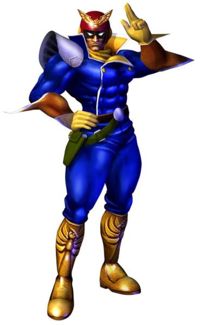
Captain Falcon (F-Zero series)


I love the F-Zero games, but I really don’t get the character design; Why do all the male characters in the game wear skin-tight spandex over a body taut with rippling muscle? With all the time they spend in the gym it’s amazing they actually get any driving done. Then again, how else would Captain Falcon dole out the Falcon Punches? Life’s not easy when you’re a mysterious bounty-hunter/wannabe super hero.


Marcus Fenix (Gears of War series)

He’s a typical hard-boiled tough guy who likes killing things, screaming obscenities and blowing things up. And because fear, empathy and feelings are for hippies and fruitcakes, he doesn’t show any of it. In a gut-wrenching scene, his squadmate Dominic rescues his captive wife from the enemy imprisonment, who’s left mangled, emaciated and suffering, in his throes of despair, left with a heartbreaking choice of letting her live on suffering unbearable pain or to euthanize her, and he chooses the latter. When he catches up with Fenix, does he get a hug? Nope. A heartfelt “I’m sorry”? Nope. Reassurance? Hell no. All he gets is a cold “I’m sorry about your loss blah blah blah” without even having the decency to look the poor man in the eye. Way to go tough guy, he just lost the love of his life, at least give him this moment.


Kratos (God of War series)

Kratos is basically a badass, and there’s really not much more to him than that. He’s a rage-filled dude who loves revenge. And he’s angry. All the time. He only stops his incessant murderous rampage momentarily to knock boots with some dusky maidens, and then it’s back to more head-lopping, torso-splitting and general dismemberment.


Scorpion (Mortal Kombat series)

Scorpion perhaps comes from the manliest of all places – Hell. Although the ongoing plot describing him suggests his motives may have more moral justification than many other characters in the Mortal Kombat games (his family was murdered by Sub Zero, and his clan destroyed), he’d much rather resolve his conflicts by tearing out some poor chump’s spinal column or bifurcating them with a samurai sword. Despite his intriguing plot, we never see much in the way of Scorpion’s move towards some kind of grand redemption, where he finds some kind of solace from all the death and pain of the past. So we’re eternally bound to see the same bloodthirsty psychopathic wraithe for as long as there’s Mortal Kombat.

The Positive…


Cyan (Final Fantasy 6)

Hailing from the days where the men in Final Fantasty games weren’t a bunch of blubbering androgynous catwalk rejects, Cyan Garamonde is simultaneously a gentlemen, masculine, strong and emotional. He’s guy you really feel for through the course of the story. When we first meet him, he’s a middle-aged retainer to the king of Doma castle, which is soon to be under attack by the Empire.

The game texts list his age as 50-odd, so he’s no spring chicken, but he’s still the strongest knight in the kingdom, and has a wife and child whom he loves dearly. After successfully defending the kingdom from the initial onslaught of soldiers, the Empire’s psychopathic general Kefka poisons the castles water supply, killing all those inside, including Cyan’s wife and child. He is sent into a depressive spiral from here on, plagued by feelings of guilt and self hatred for not being able to protect the ones he loved the most.

There’s a point later in the story where the player can take Cyan back to the decaying ruins of his home castle, and have him sleep in one of the beds; doing so will take Cyan into his innermost subconscious where he conquers the demons of his past that haunt him, and meets with his wife and child in spirit form, who assure him that they’re always with him, and to let go of all his pain and anguish. Finally able to come to terms with the tragedy, he discovers a new inner strength and rejoins the party.

Cyan’s a real rarity in gaming; you don’t see many mighty characters of his strength and capacity as a fighter as a loving family man who cares so deeply for the wellbeing of his family.


Ark (Terranigma)

Terranigma was a lesser known game, as it came out towards the end of the Super Nintendo’s lifecycle, and thus wasn’t given the appreciation it deserved for some time until it enjoyed a new half-life in the emulation scene. It also had one of the most introspective, philosophical protagonists of all time - Ark; While Ark, the hero from the Underworld, is on his quest to resurrect life on the Surface World Earth, he ponders, what is the point of it all?

He watches civilizations rise, humanity flourish, but he’s never known real happiness. Everything he’s done is to ensure that the world progresses as it should. Eventually, he takes on the Devil himself, and in a mighty showdown, slays the icon of pure evil. In a final revelation, he learns that he’s become what human civilizations would call a ‘God’, as he was the one who brought life to the planet.

However, in a tragic twist of events, he learns that by destroying the Devil, he has destabilized the balance of the Underworld and soon, he and his home will cease to exist. Despite attaining ‘God’ status, we see a more fragile and vulnerable hero than ever before; he sits alone in his village, void of company, wondering what life would have been like if he had never ‘strayed from the flock’ sitting alone as a sad, lonely, broken man.

“Even if I have a grand home, with noone to share it with, it’s meaningless”

“I had no idea that having no place to go home to is so empty and lonely”

 - Heartbreaking last words…


Daniel (Amnesia)

Daniel’s story begins with, you guessed it, Amnesia. He wakes up in the abandoned Castle Brennenberg with one serious hangover and doesn’t remember a thing. What’s worse is that he’s got some God-awful deities haunting his move as he tries to piece together what’s lead him to wake up in a decrepit old castle. But he’s not armed with AK-47s, flamethrowers, or Rocket Launchers; All he’s got is a lantern, notepad and his wits. Monsters? Better run fast or find a dark corner or cupboard to hide in. He’s a clever one, and he eventually figures out what the real deal is with the castle. He not only uses his brains, he’s dependent on them.


Isaac Clarke (Dead Space series)

Isaac gets a slot here because he’s one of the rare survival horror heroes who’s NOT a marine/rookie cop/special forces op; instead he’s an engineer sent to investigate the communications blackout onboard the gigantic interstellar mining craft, the USG Ishimura, unbeknownst to he and the rest of the rescue crew, is it overrun with a viral alien-infestation known as the necromorphs; he’s probably never fired a gun before in his life either, so it’s handy that he’s found some creative uses for engineering tools.

In addition to his engineering duties, he’s also trawling through the grisly carnage onboard the ship to see if there’s any news on his girlfriend Nicole, and whether she’s alive, dead or somewhere in between. Well, things get interesting when Dead Space 2 rolls around, and we see Isaac dealing with the trauma associated with his experiences during the plot of Dead Space 1, and struggling with his haunting memories, show humanity in him seldom seen in action heroes.


Phillip (Penumbra series)

The protagonist of the Penumbra series finds himself stuck in an old, abandoned, crumbling mineshaft somewhere in Greenland; that wouldn’t be so bad if it wasn’t filled with ravenous necrotic wolves, mutated spiders and giant earthworms. He doesn’t have any weapons for the most part either; just a couple of old, well worn hand tools he finds down there.

To get through this ordeal alive, Phillip must set traps to isolate the hostile creatures, and work out how to repair old machinery and hardware to allow him progression into the mineshaft, as well as safely negotiating treacherous terrain. Phillip is also keenly observational; objects in the environment of interest, he will note on scraps of paper. With no big guns to help him, the only way he’s going to get out alive is by using his brains.


All images copyright of their respective owners. I do not claim to own any of the images presented here unless otherwise noted. Images used for demonstrational purposes only.